Choosing an Arizona State Park: Matching Parks to Your Trip Style
Choosing an Arizona State Park can feel difficult when a trip could mean a cabin, a campsite, an RV stop, or a day outdoors. The right choice depends less on a universal “best park” than on what you need from the stay. Use your lodging, activities, travel conditions, and comfort needs to narrow the options, then confirm the details with the park.
Start with the kind of trip you want
Before comparing park names, decide what the trip needs to do for you. A destination that works well for a quiet overnight may not suit a trip built around a specific activity, and a park with the right setting may not have the kind of lodging you want. Begin with the non-negotiables, then use those to make a shortlist.
Think about whether you are planning to:
- Sleep in a tent, stay in an RV, or use a cabin.
- Spend most of the visit at camp or use the park as a base for outings.
- Focus on water, trails, scenery, history, or a relaxed picnic.
- Travel with children, older relatives, a dog, or someone with access needs.
- Arrive during hot weather, a busy weekend, or a season when conditions may affect your plans.
These are useful starting points, not assumptions about what a particular park offers. A park’s feature list is a screening tool. It does not confirm that a certain campsite, cabin, activity, or facility will be available for your dates. Once you find a promising match, check its official page for current details and any park-specific rules.
If you are still deciding what kind of setting sounds appealing, Desert, Lake or Highland: Arizona State Parks by Landscape can help you frame the choice. The setting is only part of the decision, though. Match it with the practical details that shape the stay: how you will sleep, what you hope to do, and what needs to be in place before you arrive.
Match your stay to the lodging listed
Lodging is often the quickest way to narrow a broad list of destinations. A cabin and a campsite solve different problems. A campsite may suit travelers bringing their own sleeping setup, while a cabin may be a better starting point for people who want a roof and fixed sleeping space. Neither option automatically tells you what is inside, what utilities are available, or how close the lodging is to the activities you have in mind.
According to Arizona State Parks & Trails, the following park feature listings include cabins and campsites:
| Park | Listed feature |
|---|---|
| Alamo Lake State Park | Cabins,Campsites |
| Dead Horse Ranch State Park | Cabins,Campsites |
| Kartchner Caverns State Park | Cabins,Campsites |
| Lake Havasu State Park | Cabins,Campsites |
| Lost Dutchman State Park | Cabins,Campsites |
| Lyman Lake State Park | Cabins,Campsites |
| Patagonia Lake State Park | Cabins,Campsites |
| Roper Lake State Park | Cabins,Campsites |
According to Arizona State Parks & Trails, the following park feature listings include campsites:
| Park | Listed feature |
|---|---|
| Buckskin Mountain State Park | Campsites |
| Catalina State Park | Campsites |
| Cattail Cove State Park | Campsites |
| Fool Hollow Lake Recreation Area | Campsites |
| Homolovi State Park | Campsites |
| Picacho Peak State Park | Campsites |
| River Island State Park | Campsites |
Treat these listings as a way to find possible candidates, not as a guarantee that the exact arrangement you want is offered. A listing that includes campsites does not tell you whether a park has tent sites, RV sites, hookups, or a site that fits your equipment. Likewise, a cabin listing does not tell you its furnishings, bathroom setup, pet policy, accessibility features, or proximity to other facilities.
If sleeping indoors is central to the trip, compare cabin details before choosing a destination. Cabins Across Arizona State Parks: Where They Are and How Stays Work is a useful next step, and What Does an Arizona State Park Cabin Include? Amenities to Confirm covers the kinds of specifics that should be verified rather than assumed. If you are choosing between a cabin and a campsite, Cabin or Tent? Weighing Comfort on an Arizona State Park Lake Trip can help you consider the trade-offs.
For campers and RV travelers, look beyond the word “campsite.” Check what site types are offered and whether the site can accommodate your setup. Electric, Tent and Primitive Sites at Arizona State Parks Compared explains why those distinctions matter. If you are taking an RV, confirm the site’s measurements, access, and utility details directly with the park before settling on a reservation. Matching an Arizona State Park Campground to Your Rig or Tent can help you make that comparison.
Choose activities before choosing a destination
A park may look appealing on a map, but the best fit depends on what you want to do after you arrive. Start with the activity that would make the trip worthwhile. If the plan depends on swimming, boating, a particular trail, a tour, or a visitor facility, verify that the park offers that activity and that it will be available during your visit.
Avoid choosing based on a broad label alone. “Lakeside,” “desert,” or “historic” can describe a setting, but each label leaves important questions unanswered. For a water-focused stay, check whether the park has the type of access and facilities you want. For a hiking trip, check which trails are open, what their conditions are, and whether the route matches your group’s abilities. If a visit depends on a tour or exhibit, confirm its schedule and availability before building the trip around it.
A simple way to compare candidates is to write down the activities that matter and check each official park page for them. Keep the list short enough to be useful: a couple of priorities is usually clearer than a wish list that treats every possible activity as essential. If the main attraction is unavailable, decide whether the park still works as a relaxing stay or whether you should choose another destination.
This approach is especially helpful when traveling with a mixed group. One person may be keen to hike, while another wants an easy day near camp. Ask which activities need to be available to everyone and which are optional. Then check whether the park can accommodate the group’s priorities without requiring every person to follow the same schedule.
For a day visit rather than an overnight stay, look at the facilities and activities that support the day you have in mind. Day Trips to Arizona State Parks: Picnic Spots, Beaches and Exhibits can help with planning a visit that does not depend on camping. For a longer stay, check how close your intended activities are to the lodging and what you would need to bring along.
Let the season and conditions narrow the list
The timing of a trip can change which park is a sensible fit. Weather, daylight, closures, crowd levels, and facility availability can all affect the experience. Avoid treating a park’s usual reputation as a promise about conditions on your dates. Check the official park information close to departure, especially if your plan depends on an outdoor activity or a specific facility.
In warm weather, consider how much time you expect to spend outside and whether your group can adjust the schedule if conditions make the original plan uncomfortable. Confirm what services and amenities are available, plan water and shade carefully, and avoid assuming that a campsite or cabin will provide relief from heat. Summer Trips to Arizona State Parks: Heat, Early Hours and Water offers practical considerations for making a warm-weather plan.
For cooler months, check what the nights may feel like at your destination, not just the daytime forecast. Pack for the conditions you may encounter and verify whether the park’s amenities and activities operate on the schedule you expect. Cool-Season Visits to Arizona State Parks: Winter Hours and Crowds can help with seasonal planning.
A useful seasonal check includes:
- Whether the activity you are visiting for is open and suitable for your dates.
- Whether roads, trails, or day-use areas have current closures.
- Whether the campground or cabin has the facilities you need.
- Whether park hours and gate arrangements fit your arrival and departure plan.
- Whether weather could make your chosen lodging or activity uncomfortable.
These checks are not a reason to overcomplicate a simple outing. They help prevent a mismatch between the trip you pictured and what is available when you arrive. If a particular facility is essential, confirm it rather than relying on an old listing, a general description, or an assumption based on the season.
Crowds can be another reason to adjust the destination or timing. A popular park may still be a good fit, but it can require more planning around access, parking, and campsite availability. Check the park’s official information and the reservation system before you commit to a fixed schedule. For broader timing considerations, see Holiday Weekends at Arizona State Parks: Higher Rates and Fuller Lots and Quiet Midweek Escapes to Popular Arizona State Parks.
Match the park to your group and equipment
A good destination works for the people traveling, not just for the person who chose it. Before booking, think about the needs that could change how the visit feels: mobility, age, pets, sleep comfort, privacy, and the amount of gear the group can manage. It is easier to account for those needs during planning than to discover a mismatch at the entrance or campsite.
For families, consider how much time children can comfortably spend in a vehicle, how they will use the site, and whether the day’s activities suit their ages and interests. If the trip includes grandparents or someone who prefers shorter walks, confirm access details and distances with the park. Do not assume that a site or facility is accessible simply because it appears in a park listing. Ask the park for current information about routes, surfaces, parking, and the particular facilities your group expects to use.
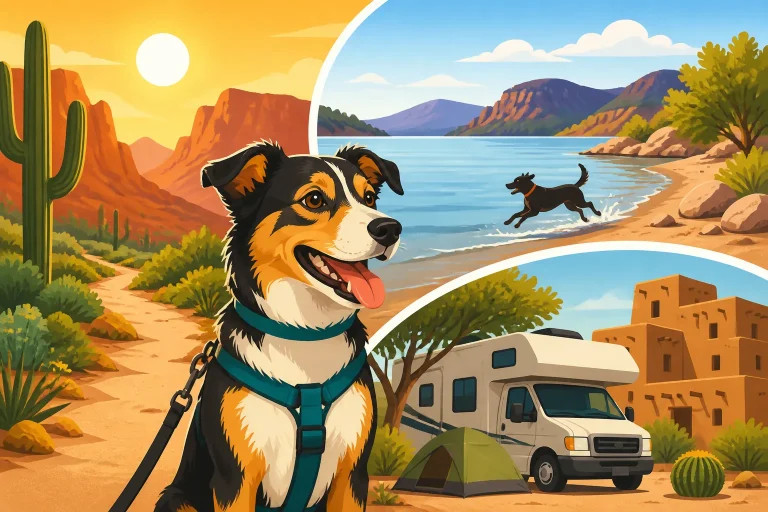
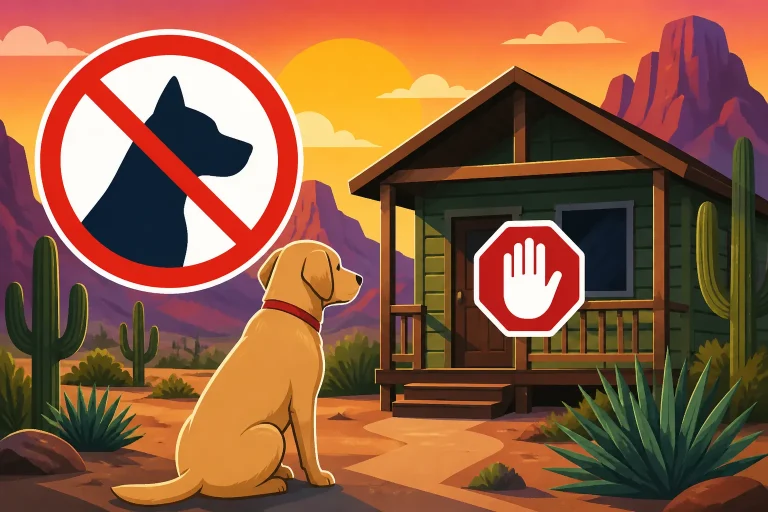
For dog owners, check the park’s rules before choosing. Pet access may differ among trails, buildings, beaches, and lodging. A park that fits the rest of the trip may still be unsuitable if your dog cannot go where you need to go or if a cabin has restrictions you have not checked. Pet Rules for Arizona State Park Campgrounds and Cabins can help identify what to verify.
For RV travelers, a park’s campsite listing is only the first filter. Confirm the site type, dimensions, surface, access route, available utilities, and any vehicle arrangements that affect your setup. If you tow a vehicle or trailer, check how the complete combination will fit and whether the booking information asks for relevant measurements. Do not infer that a park has a suitable hookup or a large-rig site from the general fact that it offers campsites.
For tent campers, verify whether the site has the ground conditions and space you need. Find out what is included and what you need to carry in. A campsite that works for a compact setup may not suit a larger tent or a group with extra equipment. Camping at Arizona State Parks Explained: Passes, Hookups, Stay Rules can help with broader planning, while the park’s own page is the place to confirm site-specific information.
For cabin guests, clarify sleeping arrangements, linens, cooking equipment, bathroom facilities, and any access or pet restrictions. Do not assume that cabins at different parks offer the same amenities. The more a group depends on a specific feature, the more important it is to verify that feature with the park before committing.
Compare practical details before you commit
Once a few candidates meet your basic needs, compare the details that can make a stay easy or frustrating. A compact checklist is more useful than trying to rank parks by reputation. The best match is the option whose confirmed features line up with your priorities, travel style, and dates.
| Planning question | What to confirm |
|---|---|
| Where will you sleep? | Whether the park offers the lodging type you need and whether it is available for your dates |
| What will you do? | Whether your priority activity or facility is offered and operating |
| Will your equipment fit? | Site dimensions, access, surface, and vehicle details |
| What must the group have? | Accessibility, pet access, bathrooms, shade, or other essential needs |
| What changes by date? | Hours, closures, weather, crowds, and seasonal availability |
| What will the stay cost? | Current lodging, admission, and other applicable charges with the official provider |
| What happens if plans change? | Current reservation, modification, and cancellation terms |
Cost is worth checking early, but avoid comparing destinations using a single number without considering what it includes. Admission, camping, cabins, and add-on services can be handled differently. Check the current charges and what each charge covers with the official park or reservation system. A lower-looking campsite cost may not represent the full trip cost if your plan also depends on separate entry, equipment, or other services.
The same caution applies to passes. A pass may cover some parts of a visit without covering every overnight or special activity cost. Before relying on one, check the coverage and any conditions that apply to the park and your group. The Arizona State Parks Annual Pass: Coverage and Where to Buy It and What an Arizona State Parks Pass Leaves Out can help clarify what to investigate.
Availability can also affect the choice. A park may fit perfectly in theory but have no suitable site or cabin on your dates. Check the reservation system before shaping a trip around a particular place, and read the terms before confirming a stay. If you are willing to shift dates, lodging type, or destination, keep a backup option in mind rather than assuming that a preferred site will open up.
Build a shortlist, then verify the details
A practical shortlist starts with the trip requirements that matter most, not with a long catalogue of destinations. Use the listed features to identify possible parks, then compare each candidate against your group, activities, equipment, and dates. The process should make the decision clearer, not turn every minor preference into a deal-breaker.
Use this sequence:
- Name the main purpose of the trip. Decide whether the priority is camping, a cabin stay, an outdoor activity, a visit with family, or a relaxed day away.
- Set the lodging requirement. Decide whether you need a campsite, a cabin, or either. If traveling in an RV or tent, identify the site details you will need to confirm.
- Choose the essential activity. Write down the activity or facility that would make the destination worthwhile. Check the official park page for confirmation.
- Account for the group. Include pets, mobility needs, children, sleep preferences, and any equipment that affects where you can stay.
- Check timing and availability. Review the dates, weather, hours, closures, reservation inventory, and current rules.
- Compare the full plan. Look at the total cost, travel logistics, included amenities, and a backup option before committing.
When you research, use the official page for the park you are considering and the official reservation system for current lodging details. General articles can help you understand the questions to ask, but they cannot confirm whether a particular site, cabin, facility, or activity is available for your visit.
It also helps to distinguish between “listed” and “confirmed.” A park feature listing tells you that a category appears among the park’s features; it does not promise an open site, a particular level of service, or a specific amenity in every campsite or cabin. For a trip built around an important detail, look for that detail in the current park information or ask the park through its official contact channels.
If you have several viable options, consider which one is easiest to adapt. A destination with a workable alternative activity may be a better choice when weather or a closure could disrupt your preferred plan. A destination that depends entirely on one unconfirmed feature carries more uncertainty. That does not make it a poor choice; it means you should check the key detail before you go and understand what your backup would be.
The best Arizona State Park for your trip is the one that fits the way you want to travel and has its essential details confirmed. Start with lodging and activities, filter by season and group needs, and verify the site, rules, costs, and availability directly with the official provider. That approach is more reliable than choosing by name alone.
Frequently Asked Questions
How do I choose between a cabin and a campsite?
Start with the sleeping setup your group wants and the gear you have. Then compare current availability, site or cabin details, included amenities, and any restrictions. Do not assume that options are identical from park to park.
Does a campsite listing confirm that an RV hookup is available?
No. A campsite listing identifies a feature category, not the site type or utilities at a particular site. Confirm the campground’s current site descriptions and hookup details with the official park information.
Should I choose a park before choosing activities?
It is usually more useful to identify the activity that matters most, then check which parks offer it. Verify that it is available during your dates before making it the foundation of the trip.
What should I check just before leaving?
Review current hours, closures, weather, reservation details, activity availability, and park-specific rules. If an essential feature is uncertain, confirm it with the park through its official channels.
Disclaimer
This article is for general informational purposes only and does not constitute professional advice. Laws, prices and regulations vary by location and change over time. Consult a qualified professional for guidance on your specific situation. Arizona Camping & RV is not a government agency and is not affiliated with any government agency.