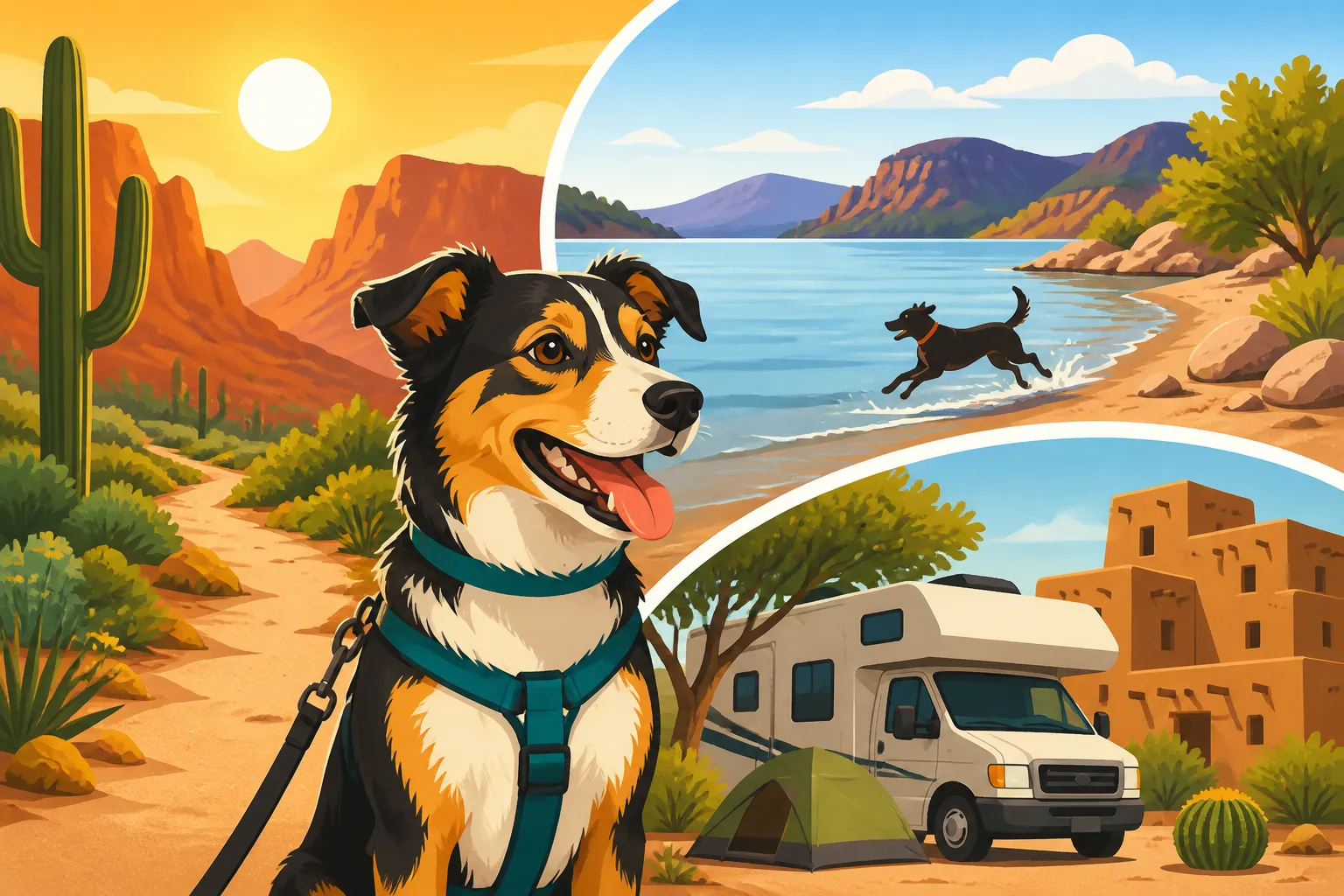
Bringing a Dog to Arizona State Parks: Trails, Beaches and Buildings
Taking a dog to an Arizona state park can make a trip more enjoyable, but access is not automatically the same at every trail, beach, building or place to stay. The safest plan is to check the rules for the specific park and the specific area you want to use, then build a backup plan in case your dog cannot go along.
Check the park and the places you plan to visit
Treat dog access as a park-by-park question, and then check each area within that park. A park’s general pet information may not answer whether a dog can join you on a particular trail, reach a beach, enter a visitor building or stay in your chosen accommodation. Read the current information for your destination before setting out.
Arizona State Parks & Trails is the official source to consult for park information. Look for pet guidance on the page for the park you intend to visit, and check again before your trip if you planned it well in advance. If a detail is unclear, use the official website to find current contact details and ask the park directly. Avoid relying on a general description, an old trip report or another visitor’s memory when a specific access question could affect your plans.
Make your check concrete. Instead of asking only whether dogs are allowed, list the places and activities that matter to your group:
- Can your dog join you on the trail you have in mind?
- Is there a dog-accessible route to the beach or shoreline area you want to use?
- Are dogs permitted inside the buildings or exhibits you expect to visit?
- Are there pet-friendly overnight options, and do their terms fit your group?
- Are any areas you plan to visit subject to separate restrictions?
These questions help uncover the practical difference between a park that welcomes pets in some areas and a trip where your dog can accompany you throughout the day. Do not assume that permission for one part of a park covers the rest. A trail, swimming area, visitor building and cabin can have different access rules, and conditions can change.
It also helps to choose your priorities before comparing destinations. If your main goal is a long walk with your dog, confirm trail access first. If the trip revolves around swimming or a beach visit, investigate that area separately. If a visitor center, cave tour or other indoor attraction is essential, plan for the possibility that your dog will not be able to enter.
For broader destination planning, Choosing an Arizona State Park: Matching Parks to Your Trip Style can help you think through the kind of visit you want. When pets are part of the decision, use that planning as a starting point—not as a substitute for checking the current rules for the exact park and facilities you will use.
Trails and walks with a dog
A trail can look like an obvious place to bring a dog, but do not assume every route is open to pets. Check the individual park’s information for trail access before deciding where to walk. If the park information does not clearly answer the question, ask rather than treating silence as permission.
When access is allowed, plan a walk that suits both your dog and the conditions. Arizona parks can include very different landscapes, and a route that seems manageable on a map may feel harder with sun, heat, rough footing or a dog that is not used to the distance. Choose a route that fits your dog’s health and ability, and be ready to turn back if the conditions are not working.
A short leash is a sensible choice in shared areas unless the park’s instructions say otherwise. It gives you more control around other visitors, wildlife and narrow paths, and makes it easier to keep your dog close when the surroundings change. Follow the park’s actual leash instructions if they are available; general advice from another visitor or another park may not match the rule at your destination. For help finding where park-specific leash guidance belongs in your planning, see Finding a Park’s Own Leash Rules Before an Arizona State Park Visit.
Think through the walk from your dog’s point of view. Is there shade along the route, or will you need to keep the outing brief? Can your dog walk comfortably on the surface? Is your dog calm around other people, bicycles or unfamiliar dogs? These are planning questions, not guarantees about what you will encounter. If you are unsure, choose a lower-stress outing or leave your dog with a trusted caregiver.
Carry water for your dog and take breaks before your pet seems distressed. Do not rely on finding water along the trail unless you have confirmed that a reliable source is available. Bring waste bags and be prepared to carry them until you reach an appropriate disposal point. These are practical habits for keeping the trail comfortable for your dog and other visitors, but they do not replace any park-specific requirements.
Avoid letting a walk become a reason to approach wildlife or leave the trail. Keep your dog under control, give other visitors room and follow posted directions. If your dog becomes excited, overheated or reluctant to continue, ending the walk early is a better choice than trying to complete a planned route at any cost.
Plan a fallback activity in case the route you want is not available to dogs. That might mean taking a shorter walk where pets are permitted, spending part of the visit in an appropriate outdoor area, or having one person stay with the dog while someone else visits a restricted location. The right option depends on the park and your group; confirm what is permitted before making the fallback plan part of your itinerary.
Beaches, shorelines and water areas
A park’s shoreline can include several kinds of places: an open beach, a swimming area, a picnic spot near the water, a boat launch or a path along the shore. Do not treat them as interchangeable. A dog may be allowed in one area and restricted in another, so check the exact beach or lakeside area you plan to visit.
Before packing for a beach day, verify whether dogs are permitted on the sand, near the water and along the route you would use to reach the shore. Check whether the answer applies to the particular area you have chosen, rather than assuming that a general pet policy covers every beach within the park. If you cannot confirm the details, choose another activity for your dog or plan the visit without bringing the dog to that area.
Water access is also not the same as permission or suitability for swimming. Even when dogs can be near a shoreline, consider the conditions, your dog’s swimming ability and whether the area is appropriate for your pet. Keep your dog under close control, particularly around children, other visitors and people using the water. Do not encourage your dog to enter the water unless you have checked the park’s rules and judged the conditions safe for your pet.
Heat deserves special attention around beaches and exposed shorelines. Sand, rocks and pavement can become uncomfortable for paws, and shade may be limited. Check the weather and the surface before setting out, bring enough water for your dog and shorten the outing if your pet shows signs of discomfort. For additional planning considerations, see Hot Sand and Pavement: Protecting Paws at Arizona Desert Parks.
Think about the rest of your group, too. If some visitors want to swim while others stay with the dog, agree on where to meet and how to keep the dog comfortable. If there is no suitable place for the dog to wait, do not assume you can leave the animal unattended nearby. Adjust the plan so a responsible person can remain with the dog, or choose an activity that everyone can do together.
A shoreline visit can be crowded or noisy, depending on the day and the area. If your dog is uneasy around people, children, water activity or other animals, an open beach may not be a relaxing choice even if access is permitted. Consider a quieter walk or picnic area if the park’s rules allow it. The aim is not just to reach the water; it is to choose an outing your dog can handle safely.
For a closer look at beach and swimming considerations at Arizona parks, see Swimming Beaches at Arizona State Parks: Safety Before You Wade In and Taking a Dog to the Shore at an Arizona Lake Park: Ask First. Use both as planning prompts, then confirm the current pet rules for your chosen park and shoreline.
Buildings, exhibits and other indoor stops
Indoor access is an easy detail to overlook when planning a day out. A dog might be welcome in an outdoor area without being permitted in a visitor building, museum, shop or tour space. Check the rules for the specific building and activity rather than assuming that park-wide access includes indoor facilities.
This matters most when an indoor stop is a central part of the trip. If you want to visit an exhibit, join a tour or spend time inside a facility, find out in advance whether your dog can enter. If the answer is no, consider whether your group can take turns, whether a suitable outdoor activity is available for the person staying with the dog, or whether it makes more sense to leave the dog at home.
Do not leave a dog unattended outside a building just because you plan to be inside briefly. The dog may be exposed to heat, unfamiliar people or other animals, and an unattended pet can create a problem for both the animal and other visitors. Make a realistic plan for supervision before you arrive. If the only way to include the indoor activity is to leave your dog without a responsible person, revise the itinerary.
Cave tours and other special activities can have their own access considerations. A general answer about pets at the park may not settle whether a dog can accompany you on a tour or enter the space where it takes place. Check directly with the park for the activity you have in mind. The article Pets in Park Buildings and Cave Tours: What to Ask an Arizona Park offers a useful set of questions to raise before you go.
Service animals can involve different access considerations from pets. If you are visiting with a service animal, check the park’s official information about the specific area or activity you plan to use. Do not assume that guidance written for household pets answers every question about service-animal access.
When you are unsure, plan the indoor portion as a separate part of the outing. Confirm where your dog can remain with a responsible person, or choose a trip that does not depend on an indoor visit. A little advance planning can prevent a frustrating decision at the entrance to a building.
Camping and cabins with your dog
Overnight plans need their own pet check. A dog that can join you in some outdoor areas is not automatically allowed in every cabin or lodging option. Read the accommodation details for the exact park and unit you are considering, and confirm that the terms still apply to your intended stay.
Arizona State Parks & Trails states: No pets are allowed in the cabins at Lost Dutchman and Lake Havasu state parks.
Other cabin options may have pet-specific terms. As of November 2026, Arizona State Parks & Trails lists the pet-friendly cabin terms this way: maximum of two pets per cabin in pet-friendly cabins and a fee of $10. Check the current park information before making plans, since fees and accommodation details can change.
A campground stay is a separate choice from a cabin stay. Confirm that pets are allowed at the type of site you plan to use and check any park-specific directions that apply to camping with a dog. Do not infer campsite rules from cabin rules, or the other way around. For general overnight planning, Camping at Arizona State Parks Explained: Passes, Hookups, Stay Rules and Pet Rules for Arizona State Park Campgrounds and Cabins can help you identify details to verify.
Before choosing a site, consider whether it gives your dog a comfortable place to rest and whether the setup suits your equipment and group. Keep your dog supervised around neighboring campers and shared facilities. Bring the food, water, bedding and waste supplies your pet needs rather than counting on finding them at the park. Those choices help with comfort and courtesy; the park’s posted requirements still take priority.
The Arizona Family Campout is not an option for a trip with a dog. Arizona State Parks & Trails states: No pets allowed at Arizona Family Campout events. If you are considering that program, arrange care for your pet or choose another camping option. For related questions about who the program suits, see Arizona Family Campout or Your Own Campsite? Comparing the Two.
A good overnight decision includes a backup. If the cabin you prefer does not allow pets, look for a pet-friendly alternative only after confirming its terms, or plan a campsite stay if that works for your group. If no suitable option is available, leaving your dog with a trusted caregiver may be safer and less stressful than trying to make an unsuitable lodging arrangement work.
Prepare your dog and your group for the visit
Once you have confirmed access, make a plan for the practical parts of the outing. Your dog should be comfortable with the kind of travel, walking and shared space the visit will involve. If your pet is nervous around crowds, unfamiliar dogs, children or new environments, choose a quieter plan or leave the dog at home.
Pack for your dog rather than assuming the park will have what you need. Useful items may include water, a bowl, food if the outing overlaps with a meal, a leash, waste bags and any supplies your dog needs for comfort. The exact kit depends on your plans, the weather and your pet. If you are staying overnight, include the items that help your dog settle in a new place.
Check the forecast and think about exposure to sun and heat. An outing that is comfortable early in the day may feel very different later, especially in open or paved areas. Keep the plan flexible, take breaks and be willing to cut an activity short. Never leave a dog in a parked vehicle as a way to make an activity work; arrange for a responsible person to stay with the dog or change the plan.
Carry identification for your dog and make sure the animal is secure before opening a vehicle door or entering a busy area. Keep a close eye on your pet in unfamiliar surroundings. If your dog becomes unsettled, move away from the source of stress and give the animal time to recover rather than forcing the situation.
Set expectations with everyone in your group before arrival. Decide who will hold the leash, who will carry water and waste bags, and what the group will do if an activity is not open to dogs. If visitors want to split up, agree on a meeting point and a clear supervision plan. These small decisions are easier to make before people are already at the trailhead or beach.
Be considerate of other visitors. Give people room to pass, avoid allowing your dog to approach strangers without their agreement, and pick up after your pet. If your dog is barking, pulling or showing signs of distress, move to a quieter area or end the activity. Courtesy does not replace official rules, but it makes shared spaces more manageable for everyone.
A practical planning sequence
Use a simple sequence before leaving home. It helps catch the most common gaps without assuming that every park has the same pet policy.
- Choose the park and identify the exact trail, beach, building and overnight option you hope to use.
- Check the current official information for each place, not only the park’s general description.
- Ask the park about details that remain unclear, using contact information on the official website.
- Decide what your group will do if a planned area does not allow your dog.
- Pack water, leash, waste supplies and any other items your dog needs for the outing.
- Reconsider the plan if the weather, your dog’s condition or the day’s conditions make it uncomfortable or unsafe.
Keep the itinerary flexible. If your dog can join a walk but not an indoor visit, you may be able to divide the day. If the beach you wanted is not suitable, an allowed outdoor area may be a better choice. If there is no safe, supervised way to include your dog in the day, choose another outing or arrange care instead.
For visitors comparing entry and overnight logistics, Day Visitors vs Campers: How Arizona State Park Access Differs can help clarify which parts of a visit to plan separately. For general dog-area planning at lakes and trails, Mapping Pet Zones Before a Dog Trip to an Arizona Lake Park and Picking Up After Your Dog at Arizona State Park Lakes and Trails are also useful prompts. In every case, confirm the current park-specific instructions before you travel.
Frequently Asked Questions
Are dogs allowed at every Arizona state park?
Do not assume so. Check the official information for your destination and for the particular areas you want to visit. Access may differ between outdoor areas, buildings and overnight accommodations.
Can I take my dog onto a trail?
That depends on the park and the trail. Confirm access for the specific route, and follow the park’s posted directions. If the information is unclear, ask the park before setting out.
Can my dog come to a beach or shoreline?
Check the rules for the exact beach or shoreline area. Permission to visit one part of a park does not necessarily answer whether dogs can enter every water or beach area.
Can my dog stay in a cabin?
Only choose a cabin after confirming its pet terms. Some cabins exclude pets, while pet-friendly options have conditions you should verify with Arizona State Parks & Trails before planning your stay.
What if I want to visit a building or tour?
Check access for that particular facility or activity. If your dog cannot accompany you, plan for a responsible person to stay with the dog or choose a different itinerary.
Sources
- Arizona State Parks & Trails — Reservation and Cancellation Policies | Arizona State Parks (checked November 22, 2026)
Disclaimer
This article is for general informational purposes only and does not constitute professional advice. Laws, prices and regulations vary by location and change over time. Consult a qualified professional for guidance on your specific situation. Arizona Camping & RV is not a government agency and is not affiliated with any government agency.