Park Rules for Arizona State Park Visitors: Gates, Pets, Vehicles
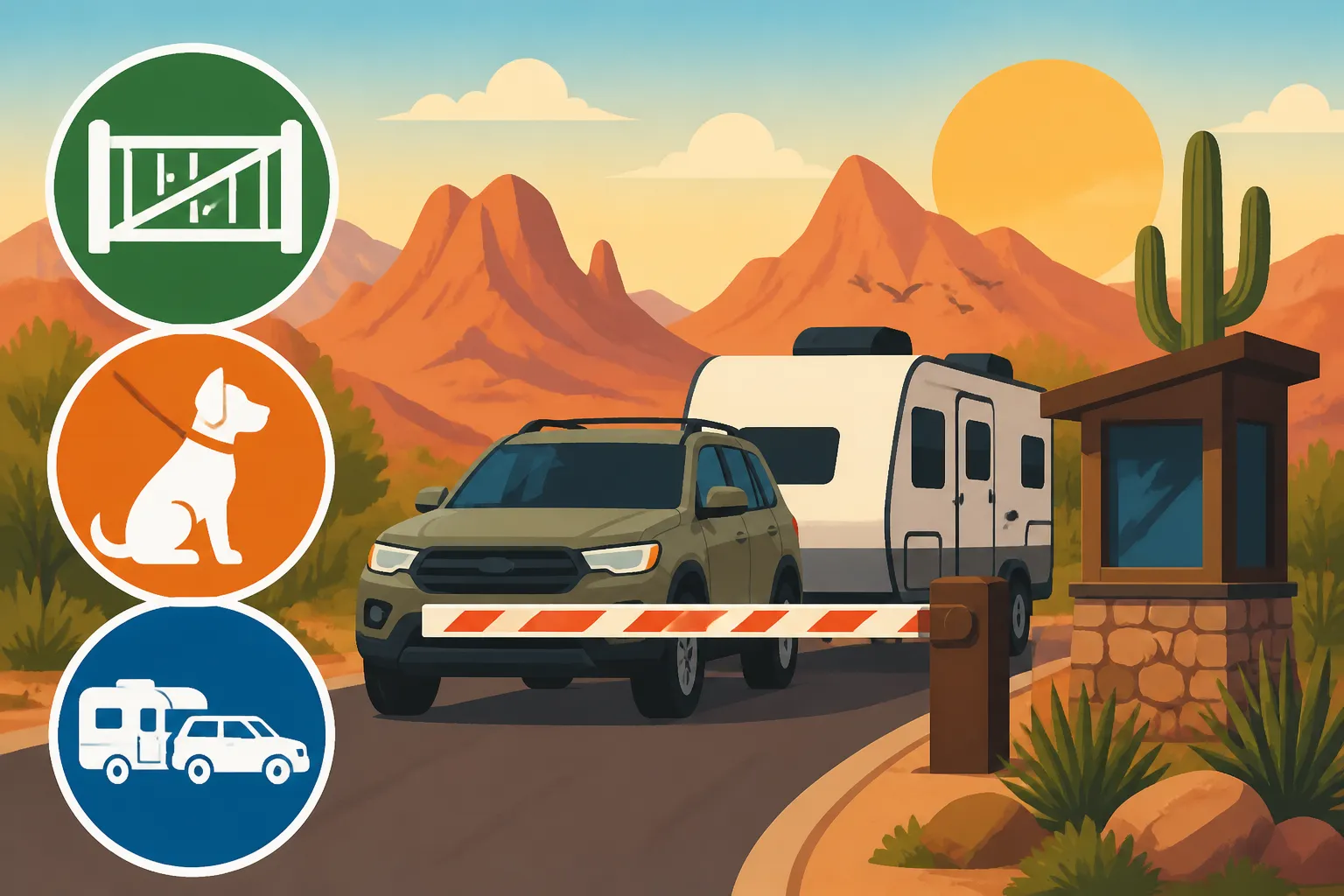
Arizona State Park rules can affect whether you can enter on foot, bring a pet, park a second vehicle or extend a camping trip. The challenge is that a rule that applies at one park or lodging type may not apply elsewhere. Here’s how to check gates, pets and vehicles before you set out—and what to confirm with Arizona State Parks & Trails.
Start with the exact place and type of visit
“Arizona State Park” is not enough detail to plan around. A day-use area, campground, cabin and trailhead can have different access arrangements, and a park may have more than one place to enter or park. Start with the name of the specific park, then confirm the rules for the activity and area you plan to use.
This matters most when your plans depend on an assumption: that the gate will be open when you arrive, that you can walk in from nearby, or that a pet or an extra vehicle can come with you. Don’t rely on a rule you remember from another park. Check the current information for your destination with Arizona State Parks & Trails, and contact the park using the current details on its official website if the listing does not answer your question.
It also helps to separate park access from campground or cabin access. Being able to enter a park for the day does not automatically answer whether a campsite is ready for arrival, a cabin guest can enter after a gate closes, or a particular parking area is open. Those details may affect different parts of the same trip. For help planning the arrival itself, see Hours and Gates at Arizona State Parks: Planning Arrivals and Exits.
Before you leave, write down the destination’s official name and check the information that matches your plans:
- Day visit: Confirm where visitors enter, where to park, and whether walk-in access is allowed.
- Trail outing: Check the trail’s access point and any park-specific directions for dropping off or collecting hikers.
- Camping: Confirm the campground’s arrival and check-in instructions, the vehicle details for your site, and the applicable stay limit.
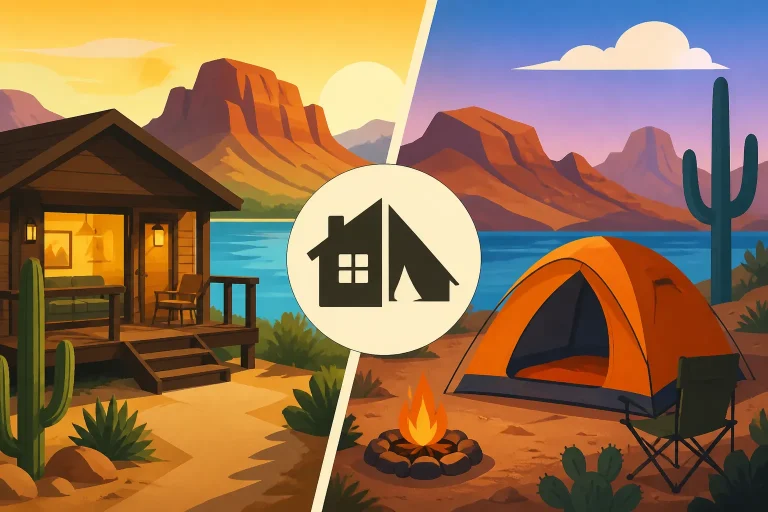
- Cabin stay: Check the cabin’s vehicle limit, required permits, and pet policy for that park.
- Visit with a pet: Find the rules for the areas you plan to use rather than assuming that a pet allowed outdoors is also allowed in a building or cabin.
A useful habit is to keep the official park information available offline or take a screenshot before driving into a remote area. That won’t replace posted instructions or a direct update from park staff, but it can help you refer to the right listing if mobile service is unreliable. If details conflict, pause and ask the park rather than choosing the version that best fits your plans.
Plan around gates and entry access
A gate affects more than the time you arrive. It can determine whether you can return to the park after leaving, reach a trailhead, or make it to your overnight stay. The safest approach is to check the destination’s current gate information before departure and plan a buffer for traffic, stops and delays.
Do not assume that every entrance has the same access arrangement, or that a visitor who is already inside can leave and re-enter without checking the relevant policy. Look for the specific park’s entry guidance and note which entrance applies to your destination. If you are staying overnight, also check whether the park’s instructions distinguish between entry to the park and arrival at the campground or cabin. For broader timing considerations, Gates Close at Dark: Timing Arrival at an Arizona State Park can help you think through an arrival plan.
A late arrival needs particular care. Confirm whether the park allows access at the time you expect to reach it and what instructions apply to your reservation or lodging. Do not count on a gate code, self-pay station, or after-hours check-in unless the official park information says that arrangement applies to your destination. If an arrival process is unclear, ask the park before departure rather than trying to resolve it at a closed entrance.
Walk-in visits and hiker drop-offs
Access on foot can be different from access by vehicle. A nearby trail, road or parking area does not necessarily mean that walking into the park is permitted. Likewise, being able to drop hikers near an entrance does not establish that a particular drop-off or pick-up arrangement is allowed.
Lost Dutchman State Park has a specific restriction. Arizona State Parks & Trails states that walk-in entry and hiker drop-off/pick-up is not permitted. If your plan involves reaching a trail without driving into the park, arrange an authorized way to access the park instead of assuming that a roadside drop-off or walk from nearby will work. Check the park’s official information for current directions and access details before you travel.
For other parks, treat access as park-specific. Confirm whether your group can use the intended entrance, where a driver can stop, and whether hikers can be collected at the same place where they were dropped off. These questions are especially important when a group plans to use more than one vehicle or when some members will arrive separately.
A practical gate check
Before setting out, make a short arrival plan:
- Find the official page for the exact park and note its entrance and gate guidance.
- Check the information again close to departure, especially if your plans depend on a late arrival or an access point away from the main entrance.
- Confirm the route to the campground, cabin or trail area rather than relying only on the park’s general entrance directions.
- If anyone in your group plans to walk in or be dropped off, verify that the specific access method is permitted.
- Keep a backup plan for a delayed arrival, such as changing your timing or contacting the park for clarification before you are on the road.
This is not a substitute for the park’s posted rules. It is a way to avoid turning an assumption about access into a wasted drive.
Check pet rules by park and area
Pet rules are easy to misread when information for an entire park is treated as if it applies everywhere. A park may have guidance for outdoor areas, trails, buildings, beaches or overnight accommodations. Confirm the policy that applies to the places you intend to visit, and ask the park if the wording does not make clear whether your pet can enter a particular area.
Arizona State Parks & Trails states that no pets are allowed in the cabins at Lost Dutchman and Lake Havasu state parks. If you are considering one of those cabins, plan on leaving your pet elsewhere or choosing an alternative stay that works with your needs. Do not assume that permission to bring a pet into a park means permission to bring one into every kind of lodging.
For other cabin destinations, confirm the pet policy for the exact cabin and park before making plans. A general page about pets may not answer whether a particular cabin allows them, whether there are conditions for bringing one, or whether a pet can accompany you into nearby indoor spaces. The relevant questions are specific: Is the pet allowed in the accommodation? Which outdoor areas can you use together? Are there posted or park-specific requirements to follow during the visit?
If you are visiting for the day, check the rules for each planned stop rather than just the park entrance. A pet-friendly trail does not, by itself, establish that a visitor center or other building allows pets. To identify what to verify, see Finding a Park’s Own Leash Rules Before an Arizona State Park Visit and Pets in Park Buildings and Cave Tours: What to Ask an Arizona Park.
Make a pet plan before departure
When the park’s information is unclear, contact the park through its official website before you travel. Ask about the specific accommodation or area, not just whether the park allows pets in general. If you are staying overnight, check that the policy applies to your booked lodging rather than relying on information for campsites or day-use areas.
If the pet cannot go where you planned to stay or visit, decide on an alternative before leaving home. That may mean selecting another type of lodging, choosing a different destination, or arranging suitable care outside the park. A plan that depends on negotiating an exception at the gate is not a reliable plan.
For a group trip, share the pet policy with everyone before they travel. One person may assume the animal can stay in a cabin because it can visit an outdoor area, while another may have booked lodging with a different policy. Agreeing on the rules ahead of time helps prevent a last-minute split in transportation or accommodation.
Understand vehicle limits and permits
Vehicle details matter at both cabins and campsites. Before traveling, confirm how many vehicles can be associated with your accommodation, which vehicles need permits, and where the park expects them to be displayed. Do not assume that every vehicle in a group can park at the cabin or site simply because the reservation is under one name.
For cabins, Arizona State Parks & Trails says maximum two vehicles per cabin, and each vehicle must display a permit. Plan the group’s transportation around that limit, and make sure every vehicle that will be at the cabin has the required permit displayed. If members of your group expect to arrive in separate vehicles, settle the parking arrangement before the trip rather than leaving it until the group reaches the park.
A cabin’s vehicle limit should not be treated as the rule for every campsite or day visit. Check the information for your specific reservation and park. If you are camping, confirm what the campsite listing says about vehicles, trailers and additional parking; if you are visiting for the day, confirm where vehicles may be left and whether parking is available at your intended area. For help distinguishing parking at a site from parking elsewhere in the park, see Parking Inside an Arizona State Park: Lots, Pull-Offs and Your Site.
Coordinate a group arriving in separate vehicles
A little coordination can prevent confusion at the entrance or accommodation. Before the trip, decide who is driving, which vehicles are part of the plan, and who will carry any required reservation information or permits. For a cabin, make sure the group understands that each vehicle must display a permit and that the cabin has a vehicle limit.
If a group has more vehicles than the accommodation allows, ask the park what options, if any, are available. Do not assume that vehicles can be left along a road, in a neighboring site or outside the park. A nearby place that looks suitable is not automatically an authorized parking area. Use only parking instructions confirmed by the park.
Also check the size and type of vehicle against the reservation information. A trailer, tow vehicle or second car may affect where the group can park, even if the number of vehicles seems manageable. If the listing does not make clear how your combination will fit, contact the park before arrival. RVs, Trailers and Extra Cars at an Arizona State Park Campsite covers the kinds of details worth checking when a camping trip includes more than a standard passenger vehicle.
Keep permit instructions visible and clear
A permit requirement is useful only if everyone knows which vehicle needs one and where it should be displayed. Read the instructions provided with your booking or by the park, and share them with the drivers who may arrive separately. If a permit is issued at check-in or handled in another way, follow the park’s actual instructions rather than improvising.
If you are unsure whether a vehicle is covered by a permit, ask the park before leaving. Do not infer that a permit for one car automatically applies to another car, or that a vehicle arriving later will be recognized without its own required display. A quick clarification can prevent a group from having to reorganize vehicles after arriving.
Know the campground and cabin stay conditions
An overnight reservation answers important questions, but it does not remove the need to check the rules tied to the length and type of stay. Confirm the permitted duration, any instructions that apply to your specific park, and what you need to do if you hope to stay longer. If your plans include multiple stops, do not assume that moving to another park automatically changes how your stay is counted; verify the rule with Arizona State Parks & Trails.
Arizona State Parks & Trails describes the campground limit as 14 nights maximum stay length within a 30-day period per park, per household (extend at discretion of the park manager). If you are planning a longer trip or have already camped at that park during the relevant period, check how the limit applies to your household and dates. An extension is not something to count on without approval from the park manager.
Cabin and campground rules should not be mixed together. A campsite reservation and a cabin reservation can have different vehicle, pet and arrival conditions. Check the information for the lodging you actually booked, and save the details that explain how to check in, where to park and what permits to display. For the broader booking process, see Arizona State Park Campground Reservations From Account to Arrival.
If a trip requires a change—such as a later arrival, an extra vehicle or a longer stay—contact the park or consult its official information before relying on the original plan. A change to one detail does not mean other restrictions have changed. For instance, a manager’s discretion about a campground stay does not itself change the pet policy for a cabin or the access rules at a trailhead.
Questions to resolve before you leave
For an overnight trip, make sure you can answer these questions from the official information:
- Which campground or cabin is covered by the reservation?
- What arrival and check-in instructions apply to that accommodation?
- Which vehicles are permitted there, and what must each driver display?
- Does the pet policy allow your animal in the specific lodging or area?
- Does the planned stay fit the campground limit, or do you need to ask about an extension?
- Where should you go if you arrive later than expected or encounter a problem?
If an answer is missing, do not fill the gap with another park’s policy or an old recollection. Use the official park website to find current contact details and ask about the exact reservation. This is particularly worthwhile when the trip combines a cabin, a campground night, a pet and separate vehicles, because each detail may be governed by a different part of the park’s information.
Use a reliable check-before-you-go routine
The most useful way to avoid rule surprises is to make a brief check part of trip planning rather than waiting until arrival. Start with the official information for the park and the activity you have planned. Then verify the details that can change your route or transportation: gate access, walk-in entry, drop-off arrangements, parking, pets and permits.
Match the information to your plans
A general park overview can orient you, but look for the specific page or reservation details that apply to your visit. A cabin guest should check cabin conditions. A camper should check campground information. A day visitor should confirm the entrance and intended parking area. A group going to a trail should confirm the trail access arrangement, including whether walking in or being dropped off is permitted.
If you are using more than one area during the same visit, check each relevant part. Do not assume that a pet policy for an outdoor area answers the question for a cabin. Do not assume that a vehicle permitted at a campsite can use any other parking area. And do not assume that access to the park’s main entrance settles the rules for a separate trailhead.
Recheck close to departure
Save the official information you used, then check it again close to departure in case the park has posted an update. If access is time-sensitive, confirm the gate guidance and arrival instructions before starting the drive. If your plans depend on a pet, an extra vehicle or an extension, resolve that question in advance.
Once you arrive, follow current posted instructions and any direction from park staff. If a sign appears to conflict with information you saved, do not treat the older page or screenshot as permission to ignore the sign. Ask the park for clarification using its official contact information.
Keep a backup for uncertain details
A backup plan is useful when an unresolved rule could block the trip. If you cannot confirm that your pet can stay in a cabin, identify another suitable stay. If your group has too many vehicles for the accommodation, decide how to travel together or ask about authorized parking before leaving. If an arrival time might fall outside the permitted access period, adjust the timing or confirm an approved procedure.
For a first visit, it can help to keep a short written list of the questions you need answered. First Time Visiting an Arizona State Park? Gate to Campsite offers a useful way to think through the arrival sequence, while What Should First-Timers Ask at an Arizona State Park Entrance? can help organize questions for the park. The aim is not to memorize every policy; it is to identify which rule applies to your exact plan and where to confirm it.
Common planning mistakes to avoid
Most problems arise when visitors treat a general impression as a confirmed rule. The park may be familiar, the group may have visited another Arizona park, or a booking confirmation may seem to cover every detail. A few careful checks can prevent those assumptions from shaping the trip.
Assuming the gate and access work the same everywhere
A gate plan for one park is not proof of the access arrangement at another. Check the destination’s specific directions and current entry information. If a trip involves walking in, arranging a hiker pick-up or arriving late, make that question explicit. Lost Dutchman State Park, for example, does not permit walk-in entry or hiker drop-off/pick-up, so a plan based on either method needs to change before travel.
Treating pet access as all-or-nothing
“Pets allowed” is not necessarily an answer about every cabin, building or activity. Check the specific area and accommodation. The cabin restrictions at Lost Dutchman and Lake Havasu state parks are particularly important for visitors who planned to bring a pet overnight. If the policy does not fit the trip, choose another arrangement before arrival.
Bringing an unplanned vehicle
A second car can seem harmless when the group is driving separately, but cabin parking is limited and vehicle permits matter. Confirm the cabin’s vehicle arrangements, tell each driver what to display, and ask the park about any question the reservation does not answer. Avoid assuming that a nearby shoulder, open area or neighboring site can serve as overflow parking.
Treating a reservation as approval for every change
A booking confirms a particular stay, not every possible adjustment to it. A later arrival, an additional vehicle, a different pet arrangement or a request to remain longer may need separate confirmation. If your plan changes, check the relevant rule again and obtain approval where required. For stay-limit questions, Can a Park Manager Shorten Your Stay at an Arizona State Park? is a related topic to review.
Relying on a remembered rule
Rules can be specific to a park, accommodation or access point. A friend’s experience can suggest what to ask, but it is not a substitute for the current official policy. Make the final check against Arizona State Parks & Trails information for your destination, and contact the park if an important detail remains unclear.
Frequently Asked Questions
Can I walk into Lost Dutchman State Park or arrange a hiker drop-off?
No. Arizona State Parks & Trails does not permit walk-in entry or hiker drop-off/pick-up at Lost Dutchman State Park. Confirm the park’s official access instructions and plan to enter using an allowed method.
Can I bring a pet into a cabin at Lost Dutchman or Lake Havasu?
No. The cabin policy at those parks does not allow pets. If you are traveling with a pet, confirm a suitable alternative before departure.
How long can a household camp at one park?
The campground stay limit applies to the household and park over a rolling period. If you need more time, ask the park manager whether an extension is possible rather than assuming it will be granted.
Can a cabin guest bring more than one vehicle?
A cabin has a vehicle limit, and permitted vehicles must display the required permit. Check the instructions for your cabin and coordinate with the group before arriving in separate cars.
Sources
- Arizona State Parks & Trails — Reservation and Cancellation Policies | Arizona State Parks (checked November 22, 2026)
- Arizona State Parks & Trails — Lost Dutchman State Park | Arizona (checked November 23, 2026)
Disclaimer
This article is for general informational purposes only and does not constitute professional advice. Laws, prices and regulations vary by location and change over time. Consult a qualified professional for guidance on your specific situation. Arizona Camping & RV is not a government agency and is not affiliated with any government agency.