Cabin or Tent? Weighing Comfort on an Arizona State Park Lake Trip
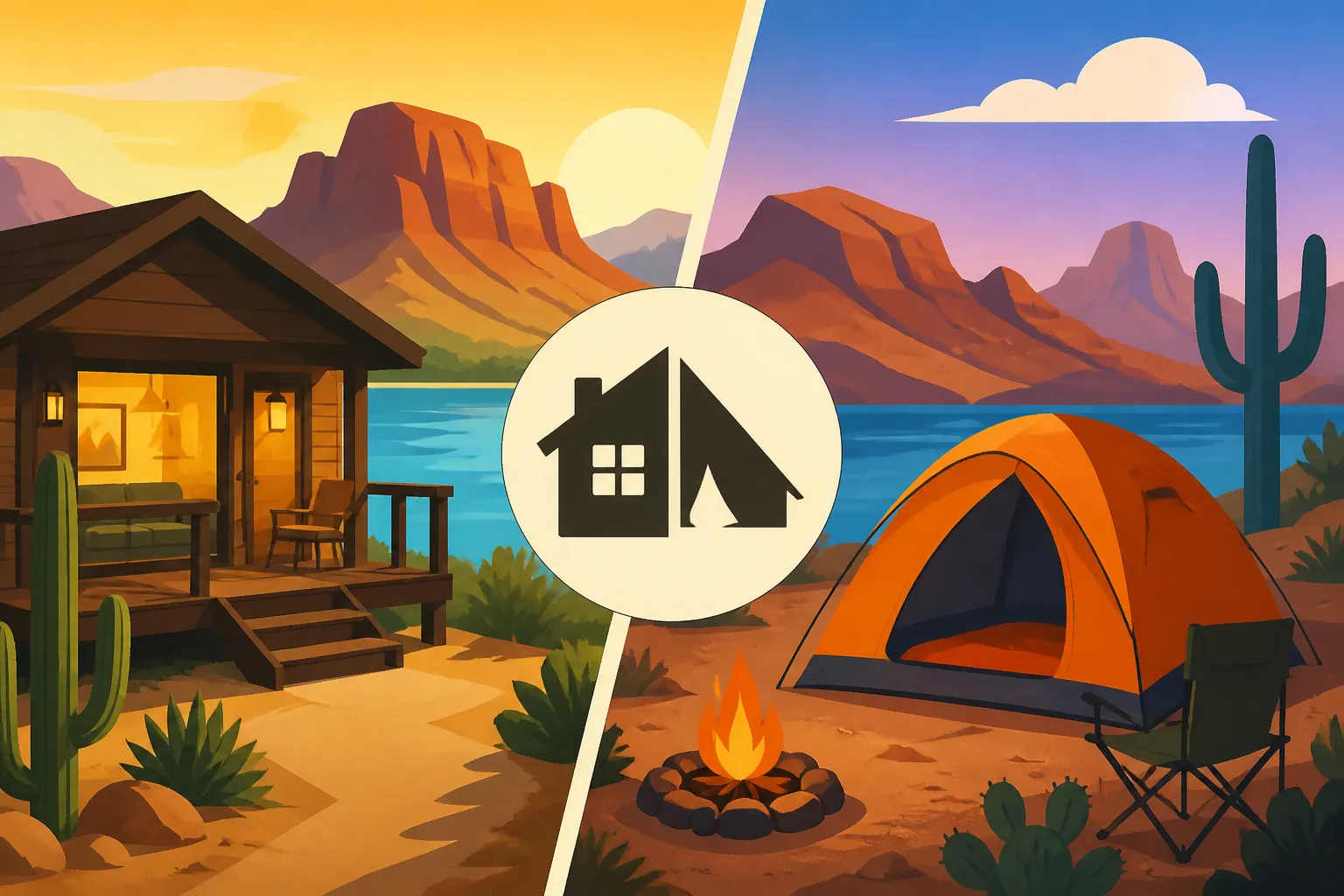
A lake trip can sound simple until you decide where everyone will sleep. A cabin offers shelter and less setup, while a tent keeps the experience outdoors and may suit travelers who already have their gear. The best choice depends on comfort, what you need to bring, the park’s facilities and how close you expect to be to the water. Here’s how to compare them without assuming every park offers the same setup.
Start with the kind of trip you want
A cabin and a tent campsite can both make a lake visit an overnight trip, but they shape the experience differently. A cabin tends to reduce the work involved in setting up camp. Tent camping usually asks for more preparation, but it can feel more like a traditional camping trip and gives you a place to use the equipment you already own.
Neither choice guarantees a shoreline location, a particular view or specific amenities. A park may list cabins and campsites as features without every site being next to the lake or every cabin offering the same facilities. Check the individual park’s current listing and reservation details before you choose.
The first question is less “Which is better?” than “What would make this trip work for the people going?” A family with a light sleeper, a traveler who wants a solid roof, or someone arriving without camping equipment may find a cabin easier. Campers who enjoy pitching a tent, cooking outdoors and packing their own setup may prefer a campsite.
Think about the whole trip, not just the sleeping arrangement. A cabin can simplify evenings and mornings, but it still takes planning: confirm what the unit provides, what to pack and how guests access the park. A tent can offer more flexibility with gear and outdoor routines, but weather, sleeping comfort and campground facilities matter more to the experience.
If you are still deciding which kind of park suits your plans, Lake Park or Desert Park for a First Arizona Camping Trip? can help you think through the broader setting. For a lake trip, also separate two questions that are easy to blur together: whether the park offers overnight lodging, and whether the particular cabin or campsite is actually close to the water.
Compare comfort, setup and what you bring
A cabin is often the easier option when you want to limit the amount of outdoor equipment you need to set up. But “cabin” does not tell you exactly what is inside. Features such as sleeping arrangements, kitchen equipment, linens, heating or cooling, and restroom access can differ. Verify each item on the park’s official page rather than treating it as standard.
Use What Does an Arizona State Park Cabin Include? Amenities to Confirm to build a question list before you reserve. Then match the answers to your group’s needs. If a cabin does not include the equipment you expected, you may still need to bring it or change your plans. A cabin can reduce setup without being a fully equipped home away from home.
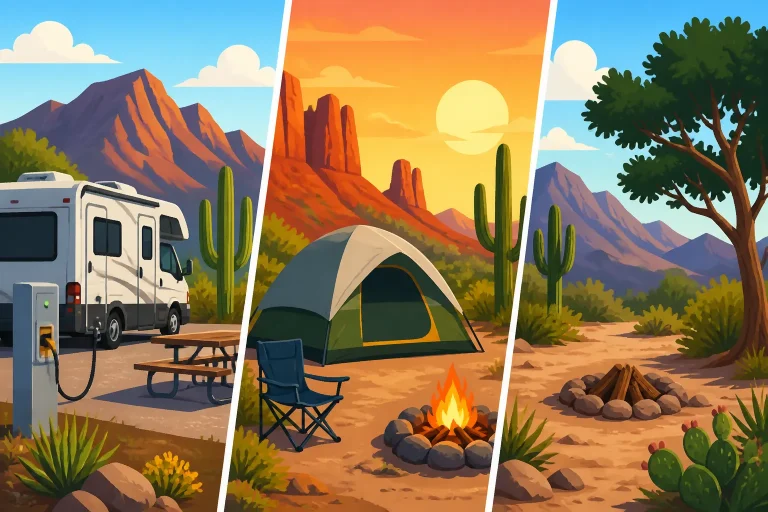
Tent camping shifts more of the comfort planning to you. Your tent, sleeping gear and cooking setup have to suit the site and the people using them. A campsite listing may identify a site type or utility connection, but those details do not by themselves tell you whether the site will fit your gear or provide the conveniences you want. Confirm the specific site information and campground facilities.
| Trip consideration | Cabin | Tent campsite |
|---|---|---|
| Shelter | A roof and enclosed space are part of the cabin stay; verify the unit’s layout and features | You bring and set up a tent suited to your group and equipment |
| Packing | You may be able to leave some camping gear at home, but check what the cabin supplies | You bring the shelter, sleeping gear and other equipment your setup requires |
| Setup | Usually less tent-related setup, though arrival and unpacking still take effort | More outdoor setup and pack-down; the amount depends on your equipment |
| Facilities | Check the specific cabin listing for amenities and restroom arrangements | Check the campsite and campground listing for utilities, restrooms and showers |
| Outdoor feel | A cabin gives you an indoor space to return to | The tent and campsite are central to the overnight experience |
| Lake access | A cabin booking does not by itself guarantee a lakeside location | A campsite booking does not by itself guarantee a shoreline location |
| Pets and vehicles | Check the cabin-specific rules and permit details | Check the campground rules for pets, vehicles and site use |
For tent campers, restroom and shower details can shape the trip as much as the site itself. Confirm the facilities you expect to use and whether their location works for your group. Confirming Showers and Restrooms Before Tenting at a State Park is a useful follow-up when those amenities are part of your decision.
Power is another detail to check instead of guessing. A tent campsite may be electric or non-electric, and the distinction matters if you rely on powered equipment. A cabin’s outlets or appliances, if any, also depend on its specific listing. Compare the actual details for the accommodation you are considering with Electric or Non-Electric Campsite? Choosing at an Arizona State Park.
The weather and your tolerance for it also matter. A tent makes your shelter and sleeping system especially important, while a cabin gives you an enclosed place to retreat to. Neither choice eliminates the need to prepare for conditions at the park. Check the forecast and the park’s current information, then plan clothing, food and equipment for the conditions you may encounter.
Check the lake connection and the park details
A park’s lake setting can be the main reason for the trip, but “lake park” does not automatically mean that your accommodation is at the water’s edge. Look at the accommodation description, campground map and reservation details. Confirm the location of the specific cabin or campsite, the route between it and the activities you have in mind, and any access details that matter to your group.
Arizona State Parks & Trails lists the park features as Cabins,Campsites at Alamo Lake State Park. Arizona State Parks & Trails lists the park features as Cabins,Campsites at Lake Havasu State Park. Arizona State Parks & Trails lists the park features as Cabins,Campsites at Patagonia Lake State Park. Arizona State Parks & Trails lists the park features as Cabins,Campsites at Lyman Lake State Park.
Those park-feature listings show that both accommodation types are among the features at these parks, but they do not tell you which specific unit is available, what it includes or how close it is to the lake. Check the individual park page and reservation details for those particulars. For a closer look at choosing a location for an overnight stay, see Lakeside Camping at Arizona State Parks: Booking Shoreline Sites.
When you compare options, write down what you need from the location rather than relying on a general label. For example, consider whether your group needs a short walk to the water, an easy route back to the vehicle, a particular kind of site or a quieter place to sleep. Then confirm whether the listing addresses those needs. If it does not, contact the park through its official website for current information.
Also check what the reservation covers. An overnight accommodation and park access are related parts of a trip, but do not assume one booking answers every question about admission, vehicle permits, utilities or campground access. Camping at Arizona State Parks Explained: Passes, Hookups, Stay Rules can help you identify the trip details to review before arrival.
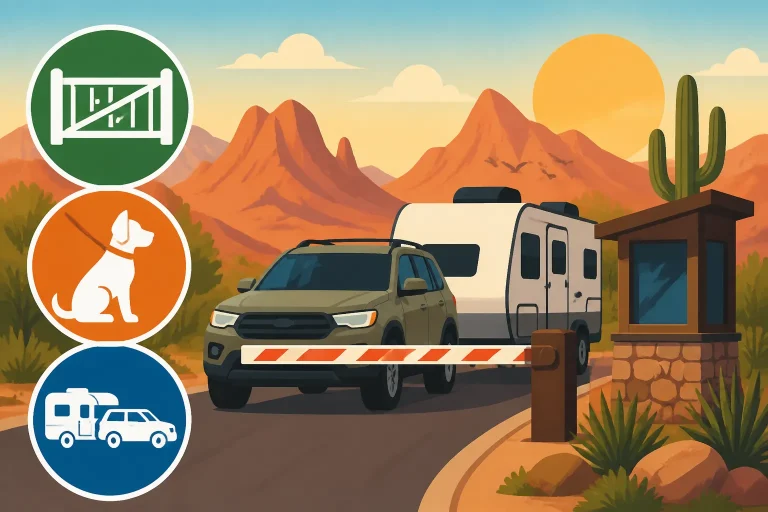
Pets and vehicles need their own checks. A cabin may have specific rules that differ from a campsite, so do not carry assumptions from one lodging type to the other. Arizona State Parks & Trails states, Maximum two vehicles per cabin. Each vehicle must display a permit.
For pet-friendly cabins, Arizona State Parks & Trails lists, as of November 2026, maximum of two pets per cabin in pet-friendly cabins and a fee of $10. Confirm the current cabin’s pet status and rules before booking, and compare those details with the campground rules if a tent site is another option. Pet Rules for Arizona State Park Campgrounds and Cabins can help you frame that comparison.
Make the choice fit your group and your budget
The total cost of a trip is more than the nightly accommodation charge. Consider what you may need to bring or rent, whether your group already owns tent equipment, and whether a cabin’s specific features would replace gear you would otherwise pack. For a tent stay, factor in the equipment and preparation that make sleeping outdoors comfortable for your party. For a cabin stay, check whether any missing items would add to your packing or trip costs.
Because prices and availability can change, compare the current booking details for the exact dates and accommodation rather than relying on an old estimate. Make the comparison for the whole stay and group, not just a headline nightly amount. A cabin can be worthwhile if its shelter and included features meet your needs; a tent site can make more sense if you have the equipment and prefer that style of camping.
Group needs may decide the question faster than cost. Consider who is going, how each person sleeps, how much gear the group can transport and how much setup everyone is willing to do. If someone needs a particular level of accessibility or an especially convenient restroom arrangement, verify those details with the park before committing. Do not assume that a general cabin or campsite description answers a specific access question.
A first-time camping group may lean toward a cabin because it can reduce the number of unfamiliar tasks at camp. That does not mean a tent trip is out of reach: choosing a manageable site, checking facilities and practicing with the gear at home can make the plan easier. Conversely, experienced campers may still prefer a cabin if they want an enclosed base for a lake-focused visit or would rather leave some equipment behind.
Use a practical decision test:
- Choose a cabin if an enclosed shelter is a priority, you want less tent setup, and the specific unit’s verified features fit your group.
- Choose a tent campsite if you have suitable gear, want the outdoor camping routine and have confirmed the site and facilities work for you.
- Compare both if the park lists both options and you are unsure whether the difference in comfort is worth the difference in cost.
- Reconsider either option if the accommodation location, access, rules or facilities do not match what your group needs.
A cabin is not automatically the more comfortable choice for everyone. Some travelers sleep better in their own tent setup, prefer to have their equipment close by or value the outdoor routine more than indoor shelter. Likewise, a tent site is not necessarily the cheaper or simpler choice once gear, preparation and the needs of the group are included. The best comparison uses the actual listing and your own priorities.
Plan the reservation and arrival around the details
Once you have a preferred accommodation, verify its details before reserving. Check the park’s official page for the current description, location, amenities, pet rules, vehicle information and any conditions that matter to your group. Review the reservation system’s information for the exact dates and site or unit you intend to book. If something is unclear, use the official website to find current park contact details.
For a cabin, pay particular attention to what is supplied and what is not. Lakeside Cabin Checklist: Linens, Cookware and a Cooler can help organize your packing questions, but the park’s listing should determine what applies to the cabin you select. Do not assume that a feature shown for one park or cabin is included at another.
For a tent site, confirm the site type and size information, the utilities shown in the listing, and the locations of restrooms or showers if those are important. Bring equipment that fits the site and suits the conditions. If your vehicle or tent setup has particular dimensions, compare them with the site information and ask the park if you need clarification.
Before setting out, keep the reservation details accessible and make sure each member of the group understands the plan. Confirm the route, arrival instructions, park access details and any rules that affect your accommodation. Conditions and operational details can change, so check the official park information close to departure rather than relying only on details gathered when you first began planning.
For the trip itself, pack for the accommodation you chose, not the accommodation you hope it might be. A cabin does not mean you can skip checking bedding, cookware, lighting or climate-related features. A tent reservation does not mean the campground provides the equipment you need to sleep comfortably. A little confirmation before departure can prevent an avoidable mismatch between expectations and what is at the site.
Frequently Asked Questions
Are cabins always closer to the lake than campsites?
No. The accommodation type alone does not establish its location. Check the park map and the specific cabin or campsite listing to see where it is in relation to the lake and facilities.
Does a cabin reservation mean the cabin is fully equipped?
Not necessarily. Cabin features vary, so check the official listing for sleeping arrangements, kitchen items, linens, restroom access and other features that matter to your group.
Can I decide between a cabin and tent site based on the park’s feature list?
A feature list can show that a park offers both types of accommodation, but it does not describe every unit or site. Use the listing as a starting point, then review the specific reservation details.
What should I check before bringing a pet?
Confirm that the specific cabin or campsite allows pets and review the rules that apply to that accommodation. Cabin and campground rules may differ, so check the current park information before booking.
Sources
- Arizona State Parks & Trails — Reservation and Cancellation Policies | Arizona State Parks (checked November 22, 2026)
Disclaimer
This article is for general informational purposes only and does not constitute professional advice. Laws, prices and regulations vary by location and change over time. Consult a qualified professional for guidance on your specific situation. Arizona Camping & RV is not a government agency and is not affiliated with any government agency.